We just went to India for 3 weeks. It was an amazing trip and there's lots to write about around it.
What's fresh in my mind tho is the re-entry to the United States.
We came in refreshed this time, thanks to a serendipitous upgrade to business class by our friends on Jet Airways. My daughter was asleep, so I carried her while my wife carted all our carryons. It was pre-emiment in a way, carrying a large weight as I moved towards customs and immigration.
They've done a lot to try and make entrance to the United States more friendly. There's still the distinction between US citizens and non, but the non are now called 'visitors' rather than foreigners or immigrants as the signs used to say in days past. There are large LED screens that show images of people smiling and saying hello. It's refreshing in a way. People forgot to move on in line because they were caught by the images flashing above them. This is also a commentary about how intoxicated we are by digital screens but that's a digression.
The immigration officials are also much friendlier. We went to one who had a yamakah on, and was joking with us while he stamped the passports.
So far so good.
Then you get into the baggage area, and the welcome starts.
I have travelled now to at least 15 airports, and the US is the only one I know of where interational airports charge you money to use a cart. A smart carte costs $5/use. For those of us who live in the US, its just a hit on the wallet. For foreigners, it makes it unusable. Yes they allow you to use credit cards - so what?
We got our luggage, paid our $5 fee and piled all our bags sky high on one cart. Lucky for us, one bag didn't arrive, because it was short checked and was (still is actually) sitting in Brussels airport.
Coming out of international and transferring to our domestic flight we got a full taste of New York hospitality. I dropped off the cart in front of the security line and heard a testy TSA rep barking at me.
'Excuse me Sir, SIR. No. That is not going to happen. I need you to move that cart out of the way so that others can move ahead in line.'
I was jetlagged, surprised and startled. My daughter was standing in front of the cart so I told her to move it out of the way.
'No. Not her. She can't do it.'
I looked at the woman as Rai pressed down on the handle bar and moved the cart out of the way.
'Yes she can' I said.
'Ok, she's strong' was the muttered response.
I do not usually say things in such situations, but today I was irritated.
'Maam, I'm sure you know a lot about airport security and rules' I said 'but please keep any opinions you have about my daughter to yourself.'
She was looking away. I was still angry. I think my daughter was nervous.
So as I handed the other lady our passports and boarding passes I said my final piece.
'I don't know what your story is, but I do not set my daughter up t fail'
So here I was, back on my way home, and I was completely thrown off by this one TSA woman who couldn't keep to herself.
In the past, I have told myself its because they work minimum wage jobs and get shouted at all day. They probably have tough lives at home and are just fighting to survive. All of that still remains true.
But I was still angry.
I thought about it all the way home, interjecting other retorts I might have made. I constructed an alternative conversation in my head about how it should have gone.
Finally I realized it was not worth the amount of time I was giving it.
So I figured I'd write it down. Hopefully that will bury it.
Monday, January 3, 2011


Saturday, December 4, 2010
Time to start writing again
I make these intentions about writing. I read my intentions weeks later and I have not started. Weeks become months, and old friends come knocking and inquiring.
Where's that blog you were talking about?
Now I'm ashamed to give them the url again.
Yet I know its such a positive release when I come out here and speak my piece.
So I will start again. Slowly. Because when I start writing, I also read the writings of my friends.
I need both.
See you all in the blogosphere.
Where's that blog you were talking about?
Now I'm ashamed to give them the url again.
Yet I know its such a positive release when I come out here and speak my piece.
So I will start again. Slowly. Because when I start writing, I also read the writings of my friends.
I need both.
See you all in the blogosphere.
Wednesday, June 2, 2010
The majesty of Angkor Wat
Photos from our trip to Siem Reap, Cambodia in December of 2006.
The main reason for going to Siem Reap was to visit the Angkor Wat complex.

Like many of the breath taking structures that are awe inspiring because of size and span, the Angkor complex is preceded by a long approach. Likely this is so that you can take in the atmosphere and surroundings as you approach

One indicator of economic disparity was the shutter click quotient. While tourists carried multiple ways to take pictures, the locals made use of the local photographer to take a single picture to mark the memorable visit.

Dancers in costume waiting to be photographed with Angkor Wat in the background. While I suspect this was more a tourist trap by intent, I did not see any takers during our time there.

The long corridors of the outer walls are filled end to end with Ramayana and Mahabharata etchings, as well as many other stories that I did not recognize. This is one of Hanuman

Statue heads on the outer walls lining the ramparts outside the complex

Walking up and down these ramparts were these magnificent elephants. It was clear that the mahouts handling the elephants had a relationship with them. They were so comfortable and caring as they handled the beasts while they waited to ply riders up to the hilltemple adjacent to the main Angkor complex

The main reason for going to Siem Reap was to visit the Angkor Wat complex.
Like many of the breath taking structures that are awe inspiring because of size and span, the Angkor complex is preceded by a long approach. Likely this is so that you can take in the atmosphere and surroundings as you approach
One indicator of economic disparity was the shutter click quotient. While tourists carried multiple ways to take pictures, the locals made use of the local photographer to take a single picture to mark the memorable visit.
Dancers in costume waiting to be photographed with Angkor Wat in the background. While I suspect this was more a tourist trap by intent, I did not see any takers during our time there.
The long corridors of the outer walls are filled end to end with Ramayana and Mahabharata etchings, as well as many other stories that I did not recognize. This is one of Hanuman
Statue heads on the outer walls lining the ramparts outside the complex
Walking up and down these ramparts were these magnificent elephants. It was clear that the mahouts handling the elephants had a relationship with them. They were so comfortable and caring as they handled the beasts while they waited to ply riders up to the hilltemple adjacent to the main Angkor complex
Tuesday, June 1, 2010
Jogyakarta travelogue: English lessons at Borobudur
December 20, 2009.

I have always found people more fascinating than buildings. There are those (like my wife) who can spend days and weeks, sometimes even their entire lives, tracking down the hidden stories and clues that buildings offer us. Me? I prefer to watch the man making his monkey do tricks at the entrance of the Red Fort.
So it is a small surprise that I was only mildly enthused about visiting Borobudur during our Jogyakarta/Bali trip. Scoff if you must, and call me a philistine. After all, Borobudur is one of the hidden treasures of the world. Remind me that I said the same thing when we were first driving towards Angkor Wat during our December 2006 trip to Cambodia. The reality is that I was not excited about going to see this magnificent Mahayana Buddhist monument.
Even with this mild discontent, it is difficult to conceal that first moment when the vantage point opens up. The close to 1/2 mile long walk leading up to the majestic monument allows you to take in the enormity of the project, let it sink in slowly. And sink in it did. I was pleased that this was a perambulatory. It meant we would have to climb. At least there would be movement.
We traversed the first set of stairs and sat in the first level enclosure. As we did, three girls with a notebook approached us and asked us if they could speak to us. Being well trained South Asians with a suspicion for all strangers in big places, we tersely said no and walked away. As I sat and watched, I noticed that small clusters of kids were approaching tourists and foreigners as they came up that first set of stairs. It seemed like they were having a conversation.
I was curious.
When a group of six school girls approached us on the second level, I didn't shoo them away.
"Hello Mister, are you busy?"
"No".
"We are from xxxx school and we would like to practice English with you."
(I slowly started to understand but was still cautious)
"Sure."
The girl beamed and her friends quickly gathered. They pulled out a notebook and began to read out their practice questions.
"What is your name?"
"What is your favorite color?"
"How old are you?"
I tried to get my daughter to answer. She preferred to watch curiously.
I was waiting for a sell at some point during the conversation.
It never came.
After an enjoyable few minutes, the kids said thank you and left.
I was delighted.

We walked around taking in the myriad seated Buddha statues, many of which were decapitated

When the next group of kids showed up I was much more relaxed. I asked them questions back. Turns out the teachers in the local schools had discovered a novel way to get their kids to practice spoken English. Go mix with the natives. So they did these field trips to Borobudur and Prambanan, walked up to total strangers, and asked them questions in English.
Some kids had a ringleader. The rest would observe and nod. I tried a couple of times to make them all talk. Most of the kids had cameras, and wanted to take a picture of us. We said no the first couple of times but then realized they were going to show it to their teacher, and started saying yes. Soon we started taking pictures of the kids.
The most striking thing was how alive they were. I suppose all kids are. They are a constant rejuvenation wherever I go. No doubt their lives were not easy. But there, on that day, they were kids again, running around together, having fun doing a school assignment.

Clothed in burkas, totally modest and polite, they exhibited a childish joy when the shutter click moment came, flashing their peace signs.
As I took my Borobudur pictures, I found they sprang to life when I included the visitors. Even though it is believed that the temple was abandoned when the Javanese converted to Islam and the Hindu and Buddhist Kingdoms died out, it was clear that these modern Muslims still held a great curiousity and interest in the monument.

I did two more English lessons that day. The last one was with a group of college kids. They ran over to us as I was waiting for my wife and daughter to return from a bathroom trip. The kids were smart, friendly and enthusiastic. It was clear they were Gen Y'ers. Everybody flashed their cell phones, and all grinned when I asked if they were on FaceBook.
"Of course!"
They told me that a fluent English speaker earned 25% more in a white collar job than a non-fluent speaker. The problem was that they had little opportunity to practice. This idea of practicing with tourists was recent. Had I more time, I would have loved to go and spend a few days at their college or school and just sit and talk to these kids. Perhaps they were practicing their English with me, but I was learning so much from them.
By the time I left the premises, I was sated. I had taken in one of the historical wonders of the world, and had spent time with the ones that would carry the future of this planet.
All in all, a good day.
I have always found people more fascinating than buildings. There are those (like my wife) who can spend days and weeks, sometimes even their entire lives, tracking down the hidden stories and clues that buildings offer us. Me? I prefer to watch the man making his monkey do tricks at the entrance of the Red Fort.
So it is a small surprise that I was only mildly enthused about visiting Borobudur during our Jogyakarta/Bali trip. Scoff if you must, and call me a philistine. After all, Borobudur is one of the hidden treasures of the world. Remind me that I said the same thing when we were first driving towards Angkor Wat during our December 2006 trip to Cambodia. The reality is that I was not excited about going to see this magnificent Mahayana Buddhist monument.
Even with this mild discontent, it is difficult to conceal that first moment when the vantage point opens up. The close to 1/2 mile long walk leading up to the majestic monument allows you to take in the enormity of the project, let it sink in slowly. And sink in it did. I was pleased that this was a perambulatory. It meant we would have to climb. At least there would be movement.
We traversed the first set of stairs and sat in the first level enclosure. As we did, three girls with a notebook approached us and asked us if they could speak to us. Being well trained South Asians with a suspicion for all strangers in big places, we tersely said no and walked away. As I sat and watched, I noticed that small clusters of kids were approaching tourists and foreigners as they came up that first set of stairs. It seemed like they were having a conversation.
I was curious.
When a group of six school girls approached us on the second level, I didn't shoo them away.
"Hello Mister, are you busy?"
"No".
"We are from xxxx school and we would like to practice English with you."
(I slowly started to understand but was still cautious)
"Sure."
The girl beamed and her friends quickly gathered. They pulled out a notebook and began to read out their practice questions.
"What is your name?"
"What is your favorite color?"
"How old are you?"
I tried to get my daughter to answer. She preferred to watch curiously.
I was waiting for a sell at some point during the conversation.
It never came.
After an enjoyable few minutes, the kids said thank you and left.
I was delighted.
We walked around taking in the myriad seated Buddha statues, many of which were decapitated
When the next group of kids showed up I was much more relaxed. I asked them questions back. Turns out the teachers in the local schools had discovered a novel way to get their kids to practice spoken English. Go mix with the natives. So they did these field trips to Borobudur and Prambanan, walked up to total strangers, and asked them questions in English.
Some kids had a ringleader. The rest would observe and nod. I tried a couple of times to make them all talk. Most of the kids had cameras, and wanted to take a picture of us. We said no the first couple of times but then realized they were going to show it to their teacher, and started saying yes. Soon we started taking pictures of the kids.
The most striking thing was how alive they were. I suppose all kids are. They are a constant rejuvenation wherever I go. No doubt their lives were not easy. But there, on that day, they were kids again, running around together, having fun doing a school assignment.
Clothed in burkas, totally modest and polite, they exhibited a childish joy when the shutter click moment came, flashing their peace signs.
As I took my Borobudur pictures, I found they sprang to life when I included the visitors. Even though it is believed that the temple was abandoned when the Javanese converted to Islam and the Hindu and Buddhist Kingdoms died out, it was clear that these modern Muslims still held a great curiousity and interest in the monument.
I did two more English lessons that day. The last one was with a group of college kids. They ran over to us as I was waiting for my wife and daughter to return from a bathroom trip. The kids were smart, friendly and enthusiastic. It was clear they were Gen Y'ers. Everybody flashed their cell phones, and all grinned when I asked if they were on FaceBook.
"Of course!"
They told me that a fluent English speaker earned 25% more in a white collar job than a non-fluent speaker. The problem was that they had little opportunity to practice. This idea of practicing with tourists was recent. Had I more time, I would have loved to go and spend a few days at their college or school and just sit and talk to these kids. Perhaps they were practicing their English with me, but I was learning so much from them.
By the time I left the premises, I was sated. I had taken in one of the historical wonders of the world, and had spent time with the ones that would carry the future of this planet.
All in all, a good day.
Friday, May 21, 2010
Dancing for my dad

I read a great post by little boxes which prompted this. I will continue to call her Rhea till there's reason not to. Reading it made me think of my daughter, who is studying Bharatanatyam.
I say studying but perhaps I should say my daughter is being made to study Bharatanatyam. She is seven years old. It is the parents dilemma between listening to what the child says about what her interests are and deciding for her that it is important for her to have a skill or discipline. This of course is summarily complicated by the fact that she is an only child, which leaves more time than is healthy more likely for ruminations by said parents on this topic.
My father started me on percussion lessons when I was five years old. I loved drums from much younger than that, so it was a welcome addition to my life. I took mridangam lessons for three and a half years. At the tender age of nine, I decided I did not want to take classes with my teacher anymore. I still remember that on the day I decided I wanted to stop classes, it was because my mridangam class coincided with a movie my family was going to see. In order to go see the movie, I told my father I wanted to stop lessons.
In hindsight, it was a loss. Not the teacher; he was very loseable. I mean the opportunity to have classical training and to advance my skills. My father didn't question my decision. In fact he gave me the money for the lessons already taken and let me tell my teacher that lessons were over. I remember that to this day. On the one hand my father was giving me autonomy. On the other, perhaps I was allowed to make this decision earlier than I was able to.
So now when my daughter tells me she doesn't want to go to class, I bribe her. I figure my job is to get her to class; it is the responsibility of her teacher (who is wonderful) to draw her into the magical world of dance. Almost always this is the case. She is smiling when she comes out, sometimes skipping rhythms as she trots to the car. The enthusiasm wanes mid week and the cycle continues.

Our thought was that by learning Bharatanatyam she would have access to multiple things; Hinduism, mythology, music, movement, expression, and grace. By doing it in class, hopefully she would make some friends and gain the discipline that comes with the development of an art form.
The one thing she definitely likes to do is dress up. She loves the two hour process of makeup, costume and jewellery. For now, that is enough to make her go to class.
As she grows older, I see glimpses of it in her everyday life. A hasta while she brushes her teeth. Footwork while she walks down the hallway, done surreptitiously so as not to give parents any evidence that she might have absorbed anything from class.
Does she have to dance all her life? No. Percussion and drumming have stayed with me all my life.
If she gets discipline and a roadway into the vast mysteries of South Asian culture, I will consider it mission accomplished.
Thursday, May 20, 2010
Just say no
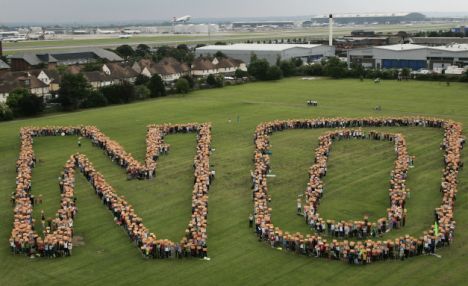
I went to buy dog food for our JackChi yesterday. Her name is Sparkle, we've had her for three months and she's an amazing rescue dog. But this post is not about her. I bought her some Solid Gold Just a Wee Bit adult dog food. The one guy at the PetCo that seemed to know stuff about the products recommended it to me. It was also ok'd by our Vet neighbour Susie. You probably know him. He's the one that all the other employees call over when you ask them a question. But then again, I'm not writing about dogfood. Not today anyway.
I bought the big case and ambled to the counter. It was my luck that the manager was at the checkout counter. I think it was AP exam week and all his highschool worker bees must have taken the day off. I stood in line and watched as he did three cross sells and then closed by finally asking the lady in front of me if she wanted to donate $5 today to the dog cancer society.
Now, don't get me wrong. I am very much in favor of science and research. I also like to help people and do what I can for the environment. I just do not like being pressed into it.
It gave me great pleasure therefore to stand there and say a curt 'No' or 'No thanks not today' for each cross sell and the $5 donation.
As I walked out, I felt a calmness and contentment. It was a comfort in the belated realization that when I said worked extra hard to please people I didn't know, the end result was that I would walk away feeling slightly cheapened or deeply irritated. Being a consensus builder and agreeable are great traits; I value them both. I also know now that I don't need to exercise them all the time.
There was this guy Bob. A balding African American man that showed up at the game room at Haverford College to play ping pong. I always beat him, altho he played well. I would subsequently spend 30 - 45 minutes listening to him talk. About any topic of his choice. I just did not know how to say 'sorry Bob, have to go' and walk away'.
I went into a RadioShack when I was 14, to look at radios. We looked at a model and the salesman sold himself to me. I didn't realize this till later. While it was more expensive than I would have liked and not what I wanted, I fought with my father about it because I didn't want to let the salesman down.
The problem was that this was the result of perfectly good middle class values and a community upbringing. When you are taught every day to think about other people and do more for others, it is then a confusing thing (at least for me) to throw those ingrained values out the door the moment you were talking to a stranger or a vendor. I think part of this is that I did not develop a strong notion of an inner, middle and outer circle of loyalty.
So how did I learn to start saying no? The good news is that after life pounds the decency out of you and beats you down to a pulp, you start to realize the need for self protection. The awareness comes slowly and you hold it close to your heart and look around surreptitiously, checking to see who else saw it delivered. There's this guilt you have to overcome about abandoning childhood values. You can circumvent this by saying that this is a more sophisticated treatment of those same values.
The conversion comes the very first time you use it. You say it.
No.
It's foreign. Scary even.
What's even more frightening is the feeling afterwards. The relief, the load off your shoulders. The unwanted responsibility now turned into a polite, yet diffident negation.
Why in the world did I not do this before?
That was my general refrain once I started swinging the No hammer.
Bang
Bang
Bang
Damn, does it feel good.
Friday, May 14, 2010
Bali travels - Child labor on Amed beach
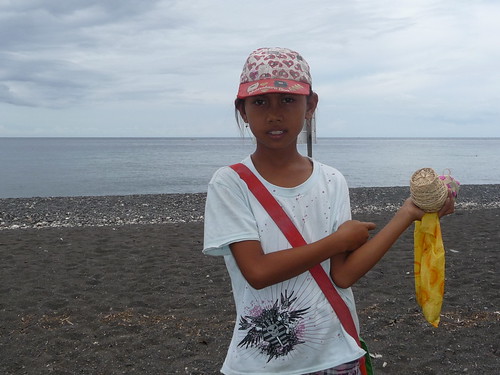
Her name is Wayan. I met her wandering the beaches in Amed, the Northern part of Bali famous for its scuba diving and snorkeling. If you've visited Bali you know the name is common, given there are only four first names in all of Bali.
She was the oldest (hence Wayan). She spoke good English. She was smart; shrewd even. Her story was good, and she was focused on selling her little boxes of salt. The hapless Australian pair who were sunbathing at the Cafe where we were, paid 50,000 Rupiah for a small wicker box of salt. She offered it to me for 10,000. Perhaps a good neighbour discount?
The conversation went something like this.
Me: How much did they pay for it?
Wayan: 50,000 Rupiah
Me: (with a smile) really?
Wayan: (with a catious smile) yes
Me:Who makes this?
Wayan: My mother makes the boxes. I did the shell design on the top. I collect the salt
Me: Do you go to school?
Wayan: Yes.
Me: Good
Wayan: I will give this to you for 10,000. Do you want to buy?
It made me smile. It was decent US rates. Roughly $1 for a wicker basket with sea salt in it. The Balinese price would be closer to $1000 rupiah. I didn't buy from her. After eating a sumptuous seafood meal at the Amed Restaurant, I saw a sign in broken English that was clearly for the benefit of the tourists.

It didn't shock me as such. After all, it is the same sentiment in India. We all feel very strongly that child labor should be abolished. Yet in different ways we have all made use of it, perhaps guiltily, because it suited us and improved our quality of life. From the perspective of those below the poverty line, living from hand to mouth, it was a matter of survival not morals or ethics. The notion of a child's quality of life was an unreachable sentiment to those parents.
I felt the familiar pangs of guilt as I walked the 600 yards back to the luxurious Kembali Beach Bungalow, a small resort run by a Dutch immigrant who now called Bali his home. I want to help, but I know that there is likely some 'bossman' who is collecting most of the profit the kids make. It's the same rackets as the streets of Mumbai.

I spoke to one of the workers there a little later. Ketut, who was a local, was starting to speak to me a little more. Now that we had been there for two days, I asked him questions about Amed and Bali in general, and about his life in particular. This topic was clearly close to his heart as he was quick to respond.
The signs he told me, were put up by the people that started the scuba diving shops on Amed beach. They were not local. They were Javanese, but not from Bali, and definitely not from Amed. Because of weather conditions, the sea faring folk could not make salt and sell it in quantity. So on a given day, if they do not catch any fish, they go hungry.
'How can they judge?' He asked me somewhat angrily. 'They don't provide employment for the adults. They underpay and take advantage. Then they put up signs that we should not buy from the children.'
I did not have an answer. Standing there in that picture perfect part of the world, I felt his sadness and helplessness.
I went home that day and hugged my little girl. It alleviated the heaviness in my heart about Wayan's prospects for the future.
The next day, we bought some beads from Wayan.
Subscribe to:
Posts (Atom)